
 العربية

- 20 نوفمبر، 2025
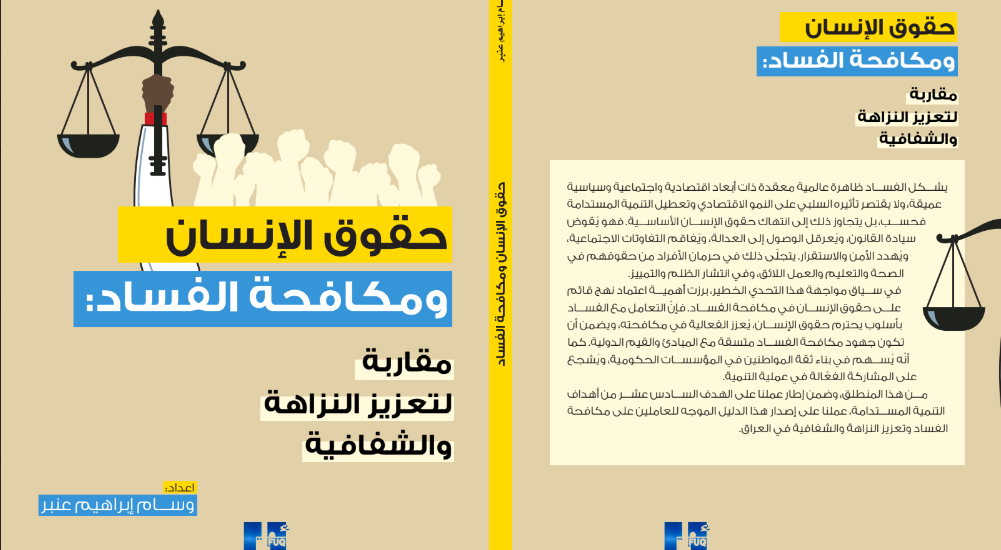
We at Ufuq Organization for Human Development are pleased to present our new guide titled “Human Rights and Anti-Corruption: An Approach to Strengthening Integrity and Transparency.” This guide serves as an important reference for practitioners and stakeholders working in the fields of human rights and anti-corruption in Iraq, and represents a key step toward promoting integrity and transparency within national institutions and civil society.
Why this guide matters:
In light of the ongoing challenges faced by Iraqi society and the world in combating corruption, the role of human rights has emerged as a central pillar in this effort. This guide aims to provide a clear framework for professionals working on anti-corruption initiatives, one that respects fundamental rights and enhances the effectiveness of anti-corruption measures. This approach can strengthen trust between citizens and government institutions and encourage meaningful participation in development efforts.
Key contents of the guide:
Introduction:
An overview of the essential relationship between human rights and anti-corruption, and how a rights-based approach can help build more transparent and accountable political and social systems.
Definition of corruption and its impact on human rights:
A detailed discussion of the concept of corruption and its economic, social, and political dimensions, with a focus on its damaging effects on rights such as health, education, and access to justice.
Legal texts:
An overview of international human rights conventions and treaties that call for combating corruption and promoting transparency in public institutions, ensuring social justice and the protection of individuals’ rights.
Core principles of the human rights-based approach:
A presentation of the main principles that should guide anti-corruption efforts within a human rights framework, including equality, non-discrimination, and the right to access information.
Human rights mechanisms for combating corruption:
An examination of human rights mechanisms that can be used to fight corruption, along with relevant international and national experiences.
The role of civil society in promoting integrity:
A discussion of how civil society can activate the United Nations Convention against Corruption (UNCAC) and contribute to creating a more transparent environment.
National anti-corruption mechanisms in Iraq:
An outline of the local mechanisms adopted in Iraq to combat corruption, along with recommendations to enhance their effectiveness in promoting transparency and integrity.
Ufuq Organization’s work in promoting transparency:
An overview of Ufuq’s efforts to advance transparency and integrity in Iraq through development projects and training activities aimed at raising public awareness, including its role as a member of the UNCAC Coalition.
Objectives of the guide:
-
Increase awareness of the impact of corruption on human rights.
-
Highlight international and national legal mechanisms for combating corruption.
-
Support Iraq’s national anti-corruption efforts through a human rights-based approach.
-
Encourage civil society to actively participate in combating corruption and promoting transparency.
At Ufuq, we believe that combating corruption requires a firm commitment to fundamental human values and that every effort toward this goal is a step toward a more just and transparent Iraq. Through this guide, we hope to contribute to strengthening both public and institutional understanding of the importance of integrating human rights into all anti-corruption efforts.
To download the guide, please visit the following link: